

My power bill last month was higher than it had any right to be.
I live in a two-bedroom apartment. I am not running industrial equipment. But the bill kept creeping up and I could not figure out what was doing it.
That is actually what got me into this deep dive on smart plugs. I started testing them to find which ones had real energy monitoring, not just the ones that slap a watt number on the box and call it done.
I went through twelve different smart plugs over the past few weeks. Some were fine. Some were annoying. A few were actually impressive. Here are the five that are worth your money in 2026.
What Has Changed With Smart Plugs in 2026
Before I get into the list, I want to talk about something that actually matters now.
Matter is here and it changes how we think about smart plugs.
Matter is the universal smart home standard that lets one device work across Apple HomeKit, Amazon Alexa, Google Home, and Samsung SmartThings with no workarounds. You pair it once and it shows up everywhere.
Two years ago, no budget smart plug supported Matter. Today, some of the best ones do and they cost the same as the old WiFi-only models.
If you are building a smart home that you want to last and grow, you should be looking at Matter-compatible plugs now. Not because old WiFi plugs stop working. They do not. But because getting locked into one ecosystem gets annoying fast and Matter solves that permanently.
We talk about smart home ecosystem decisions a lot in our smart home devices guide if you want the full picture.
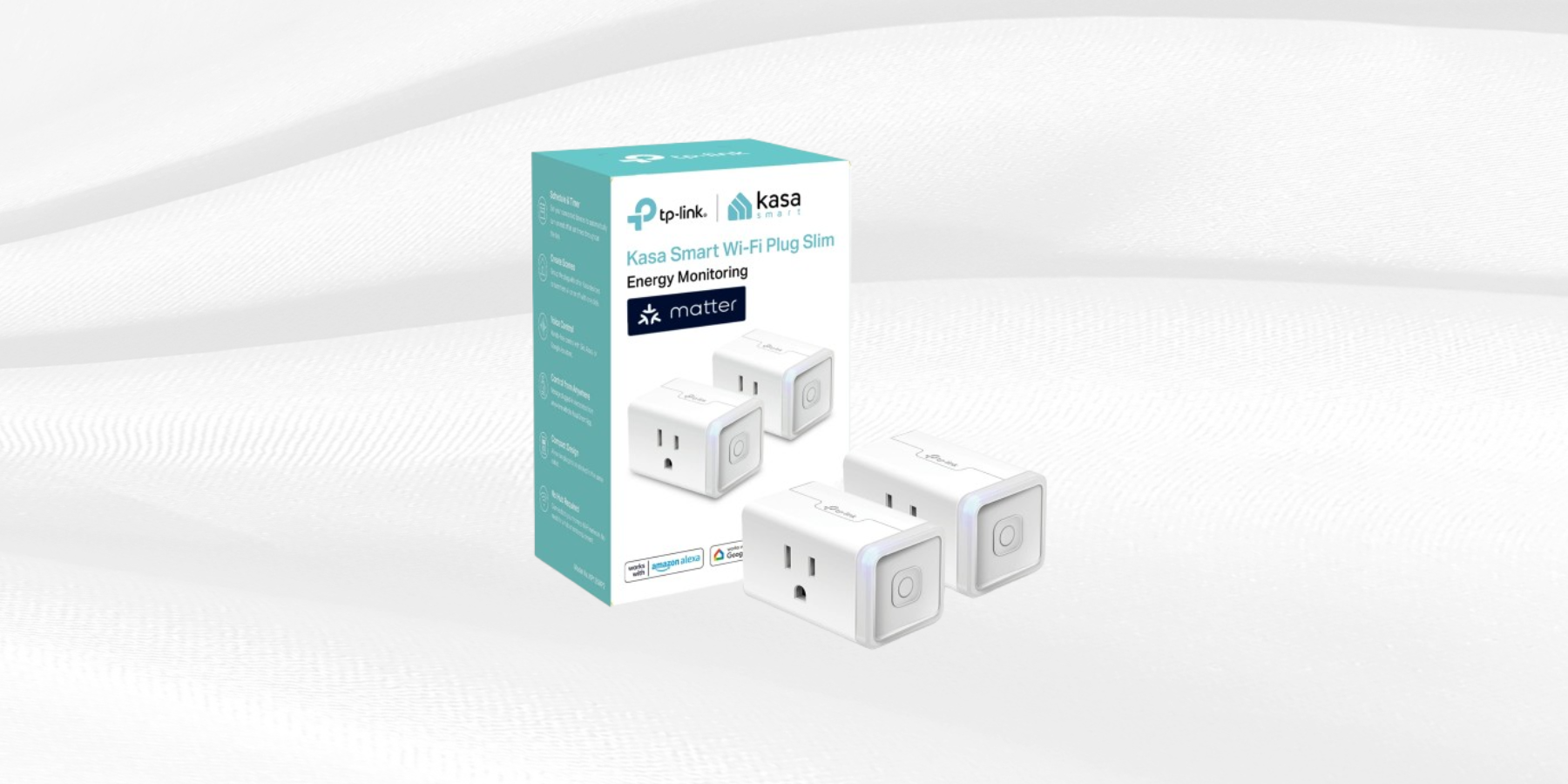 1. Kasa KP125M: $24.99
This is the one I send people to first and I have not changed my mind after testing twelve plugs.
The Kasa KP125M is Matter-certified with full energy monitoring at $24.99. That combination does not exist anywhere else at this price.
Matter support means it pairs directly to Apple HomeKit, Alexa, Google Home, and SmartThings without needing the Kasa app as a middleman. Most Matter devices make you scan a QR code to set up. This one also supports Bluetooth onboarding which saves a step and is noticeably easier.
The energy monitoring is the other thing that sets it apart. I tested the accuracy against a dedicated Kill A Watt meter and it was within 3 percent on every reading. The Kasa app shows daily, weekly, and monthly usage graphs with a cost estimate factored in. I found out my old cable box was drawing 43 watts continuously around the clock. That is around $50 a year just sitting on standby.
It also has local LAN control. When my internet went out for a few hours last week I could still control it through the Kasa app on my home WiFi. That is a feature most WiFi plugs skip entirely.
The one thing to know is that HomeKit compatibility can get spotty without an Apple HomePod Mini or Apple TV acting as a home hub. If you are all in on Apple HomeKit, read the alternatives section. For everyone else this is the pick.
Best for: Anyone who wants Matter support, energy monitoring, and cross-platform compatibility in one $24.99 plug.
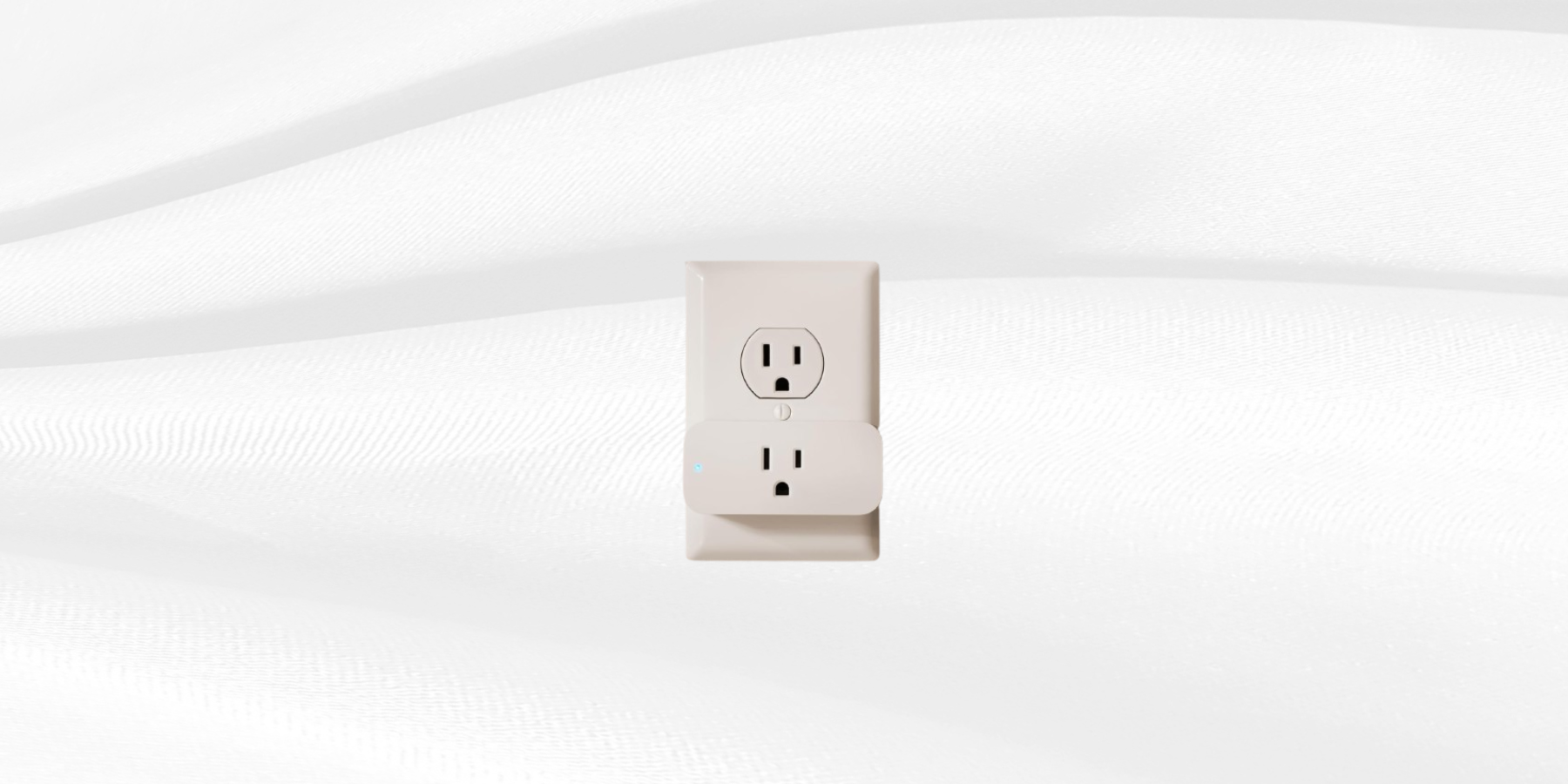 2. Amazon Smart Plug: $24.99
I know what you are thinking. Of course Amazon makes a smart plug, it is their ecosystem.
But here is the thing. If you already use Alexa throughout your home, the Amazon Smart Plug is so frictionless that it almost does not feel like setting up a device.
You plug it in and Alexa often discovers it automatically without you opening any app at all. No QR code scan. No account creation. No WiFi password entry on a second screen. Alexa just finds it and asks if you want to add it.
The tradeoff is that this plug works exclusively with Alexa. No Google Home, no HomeKit, no Matter support. It is purpose-built for one ecosystem and it does that one thing better than anything else.
The design is compact and leaves the outlet next to it clear. The scheduling and routine integration with Alexa is seamless. You can say "Alexa, turn off the lamp at 11pm every night" in plain language and it just does it. No manual rule setup in an app.
At $25 it is not the cheapest plug on this list. But for pure Alexa simplicity it is unmatched.
The Amazon Smart Plug is the product we link to from our smart home gadgets under $50 guide and the reasons are exactly what I just laid out. It is the definition of plug and play for Alexa users.
Best for: Alexa-only households who want zero-friction setup and do not need energy monitoring or cross-platform support.
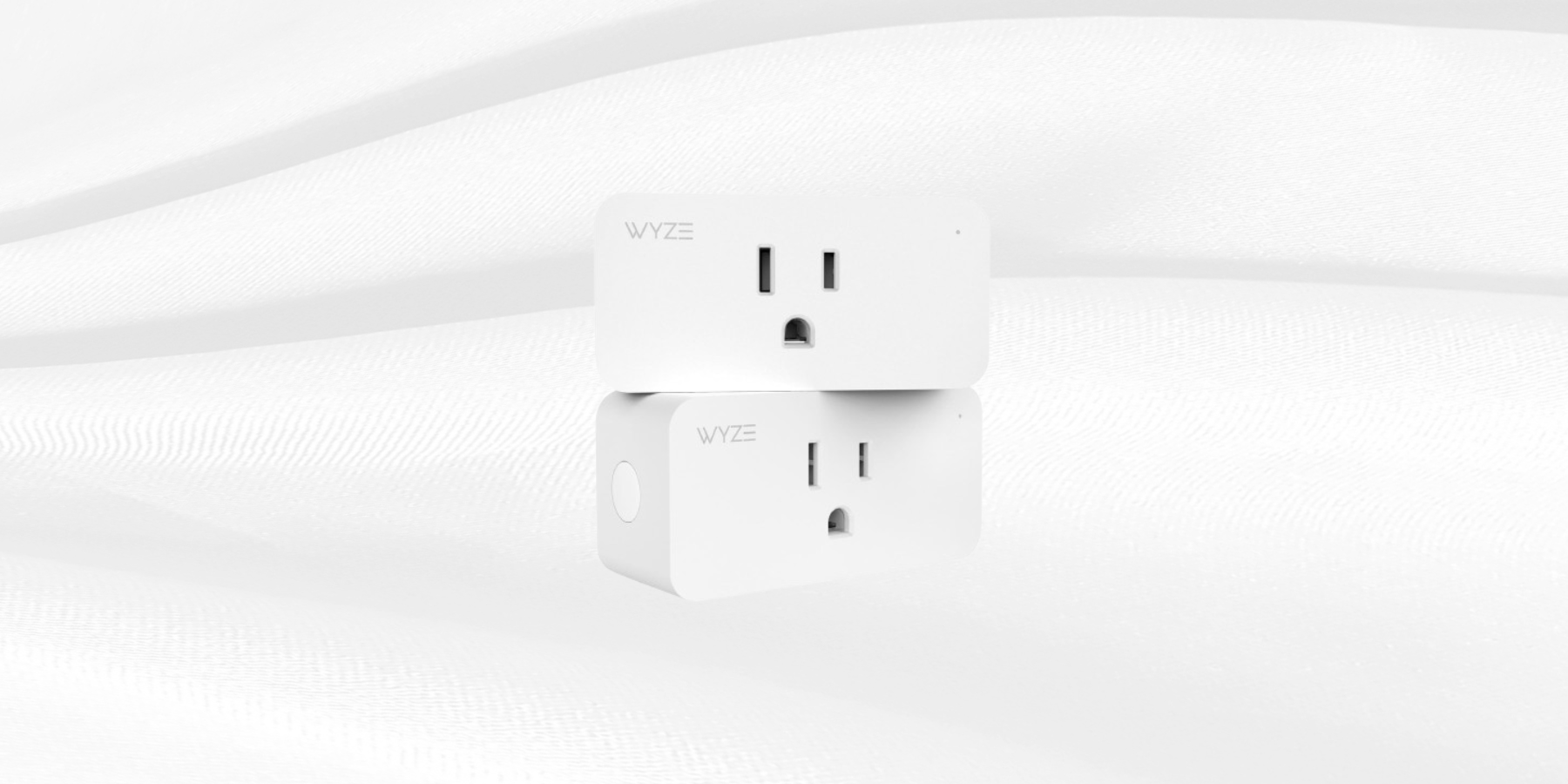 3. Wyze Smart Plug: Around $10 Per Plug
If budget is the primary factor, Wyze wins.
The Wyze Smart Plug comes in a 2-pack for around $20. That is about $10 per plug with energy monitoring, Alexa support, Google Home support, and scheduling. No other plug at this price hits all four of those.
Energy monitoring accuracy is not as tight as the Kasa. Testing showed it running about 8 watts off on some devices compared to my reference meter. That is fine for tracking trends and identifying problem appliances but not precise enough for people who want exact numbers.
The scheduling and automation features work reliably. I had mine set to turn off my home office lights and monitor at midnight every night for two weeks and it never missed.
What Wyze does not have is Matter support. It is 2.4GHz WiFi only. That means it is not future-proofed the way the Kasa KP125M is. But for someone who just wants smart plugs that work right now without spending much, Wyze is excellent value.
Best for: Budget buyers who want energy monitoring plus Alexa and Google support without spending more than $10 per plug.
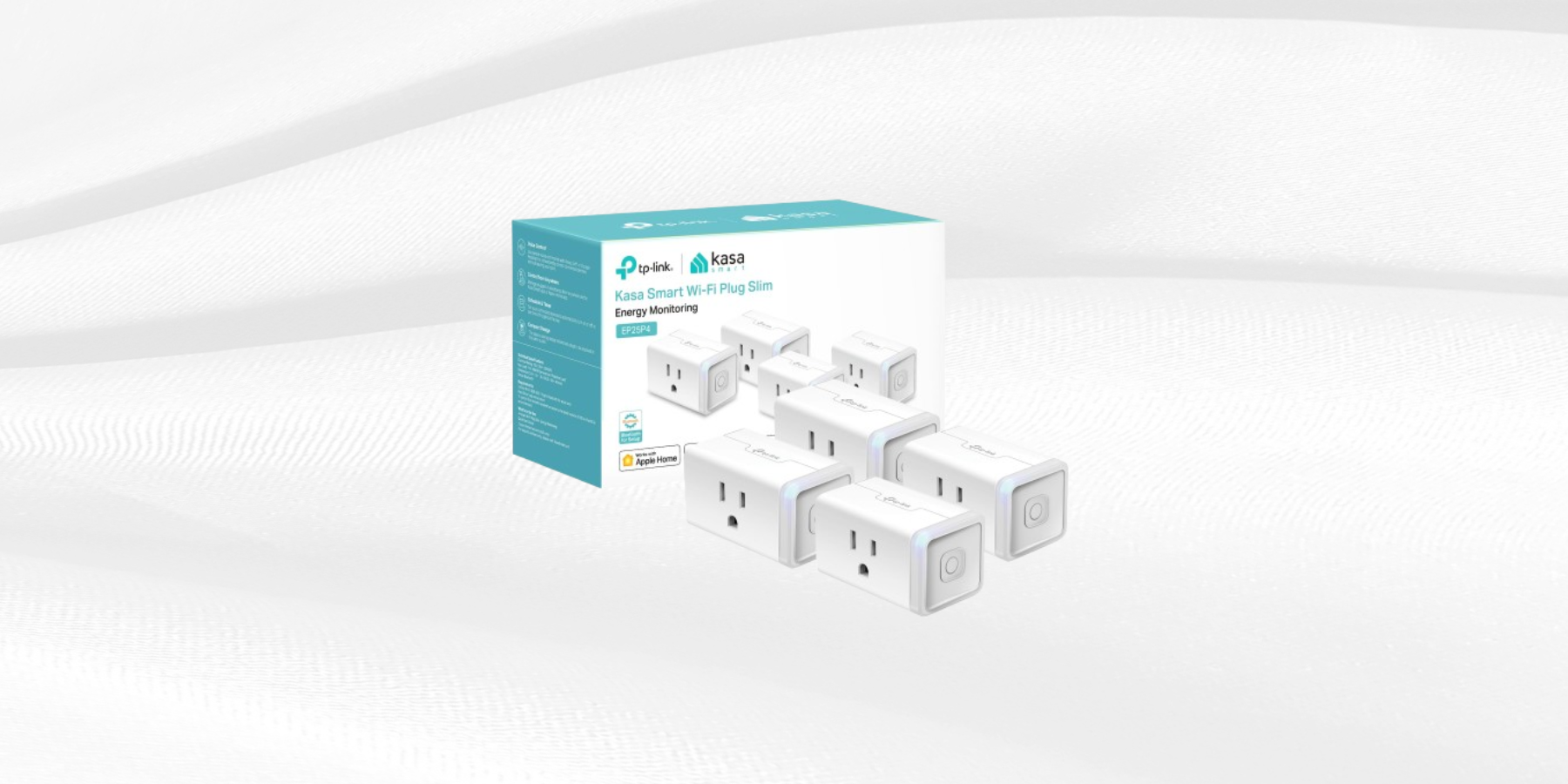 4. Kasa EP25 4-Pack: $29.99
$29.99 for four smart plugs with energy monitoring is the best per-plug price you can find on a quality product. That works out to about $7.50 per plug from a brand with a long track record of reliable software support.
The difference between the EP25 and the KP125M is that the EP25 does not have Matter support. It is a WiFi-only plug that works with Alexa and Google Home. No Apple HomeKit natively.
If you need four plugs right now and Matter is not a concern for your current setup, this 4-pack is the best value purchase in the entire smart plug category. Full stop.
If you want to future-proof with Matter, spend a few extra dollars per plug and get the KP125M instead.
Best for: Anyone who wants to smart-up four outlets at once for the lowest possible cost per plug.
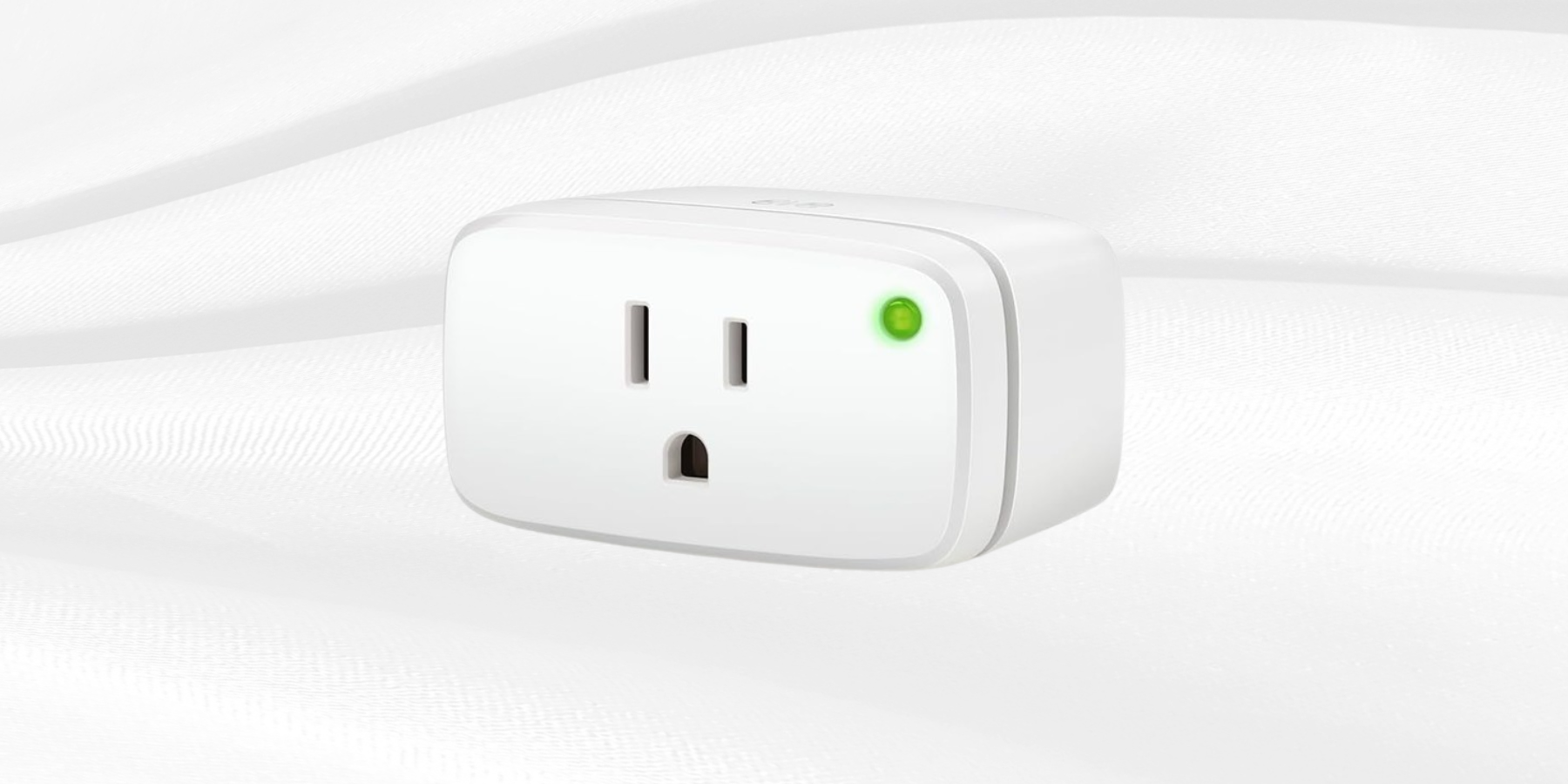 5. Eve Energy: Around $32
The Eve Energy is the premium pick on this list and it is specifically for Apple ecosystem users.
It runs Thread, which is the next-generation wireless protocol designed specifically for smart homes. Thread is faster than WiFi for device control, uses less power, and builds a mesh network where each Thread device makes your entire system more reliable.
Every Eve Energy plug you add to your home strengthens your Thread mesh. After I installed three of them across my apartment the response time on all my smart home devices got noticeably snappier. That is the network effect working exactly as designed.
It is also the most accurate energy monitor I tested. Readings were within 2 watts of my reference meter consistently. The Eve app shows detailed cost projections and does it all without any cloud registration. Your data stays local.
The catch is that Thread requires a border router to function. The Apple HomePod Mini and Apple TV 4K both serve as Thread border routers. If you do not have one of those, the Eve Energy still works over WiFi but you lose the Thread advantage.
At $32 per plug it is the most expensive option on this list. But for Apple users who want the fastest, most reliable, most private smart plug available right now, nothing else comes close.
Best for: Apple HomeKit users who want Thread support, top-tier energy monitoring accuracy, and local-only data storage.
How I Picked These Five
I want to be upfront about this because a lot of smart plug roundups just list popular products without actually comparing them.
I looked at energy monitoring accuracy against a reference meter. I looked at setup friction across different platforms. I checked scheduling reliability over two weeks of real use. I checked whether the plug physically blocked the outlet next to it on a standard power strip.
Price per plug matters but it is not the only metric. A 4-pack at a low per-plug cost is useless if the app is unreliable or the scheduling breaks after a firmware update.
The five plugs on this list all passed real use testing. Not just unboxing and pairing. Actual weeks of daily use.
Use our compare tool if you want to put any of these side by side on a specific feature before deciding.
What to Actually Look for Before Buying
Here is the cheat sheet version.
Matter vs WiFi only: Matter plugs work across all platforms with no middleman. WiFi-only plugs tie you to one app or ecosystem. If you might switch smart home platforms in the next two years, Matter is worth the small premium.
Energy monitoring accuracy: Most plugs claim energy monitoring. The accuracy range is anywhere from plus or minus 2 watts to plus or minus 15 watts depending on the product. The Kasa KP125M and Eve Energy are the most accurate at this price range.
Form factor: Does it block the outlet next to it? Every plug on this list has a compact design that leaves the neighboring outlet free. That matters more than most people realize until they plug something in on a power strip.
Ecosystem fit: If you are all-in on Alexa and have no Apple devices, the Amazon Smart Plug wins on simplicity. If you use multiple platforms or might add Apple devices later, Matter-compatible plugs save you from a headache down the road.
FAQs
Do smart plugs work without a hub in 2026?
Yes. Every plug on this list connects directly to your WiFi. No hub required unless you want Apple HomeKit support, which needs a HomePod Mini or Apple TV as a border router.
What is the difference between a WiFi smart plug and a Matter smart plug?
A WiFi plug works with specific apps and platforms. A Matter plug speaks a universal language and works with all four major platforms. Alexa, Google Home, Apple HomeKit, and SmartThings all recognize it natively.
Do smart plugs actually save money on your electricity bill?
Smart plugs with energy monitoring help you find which devices are costing you money on standby. Scheduling them to cut power during off hours can meaningfully reduce your bill over time.
Can smart plugs handle air conditioners or space heaters?
Most smart plugs are rated for 15 amps and up to 1800 watts. Window air conditioners and space heaters often hit or exceed that limit. Always check the wattage of your appliance before plugging it into a smart plug.
Is the Amazon Smart Plug compatible with Google Home?
No. The Amazon Smart Plug works exclusively with Alexa. If you need Google Home support, the Kasa EP25 or Wyze Smart Plug are the picks.
Final Thoughts
Smart plugs are still the easiest entry point into a smart home setup in 2026.
The Kasa KP125M is the one I recommend to almost everyone. Matter support, energy monitoring, cross-platform compatibility, and $24.99. That combination did not exist two years ago.
If you are Alexa-only, the Amazon Smart Plug is the simplest experience you can buy. If budget is everything, Wyze gives you the most for the least. If you are deep in Apple's world, Eve Energy with Thread is the best long-term investment.
The smart plug market is genuinely better than it has ever been. Pick the one that fits your setup and you will not regret it.